

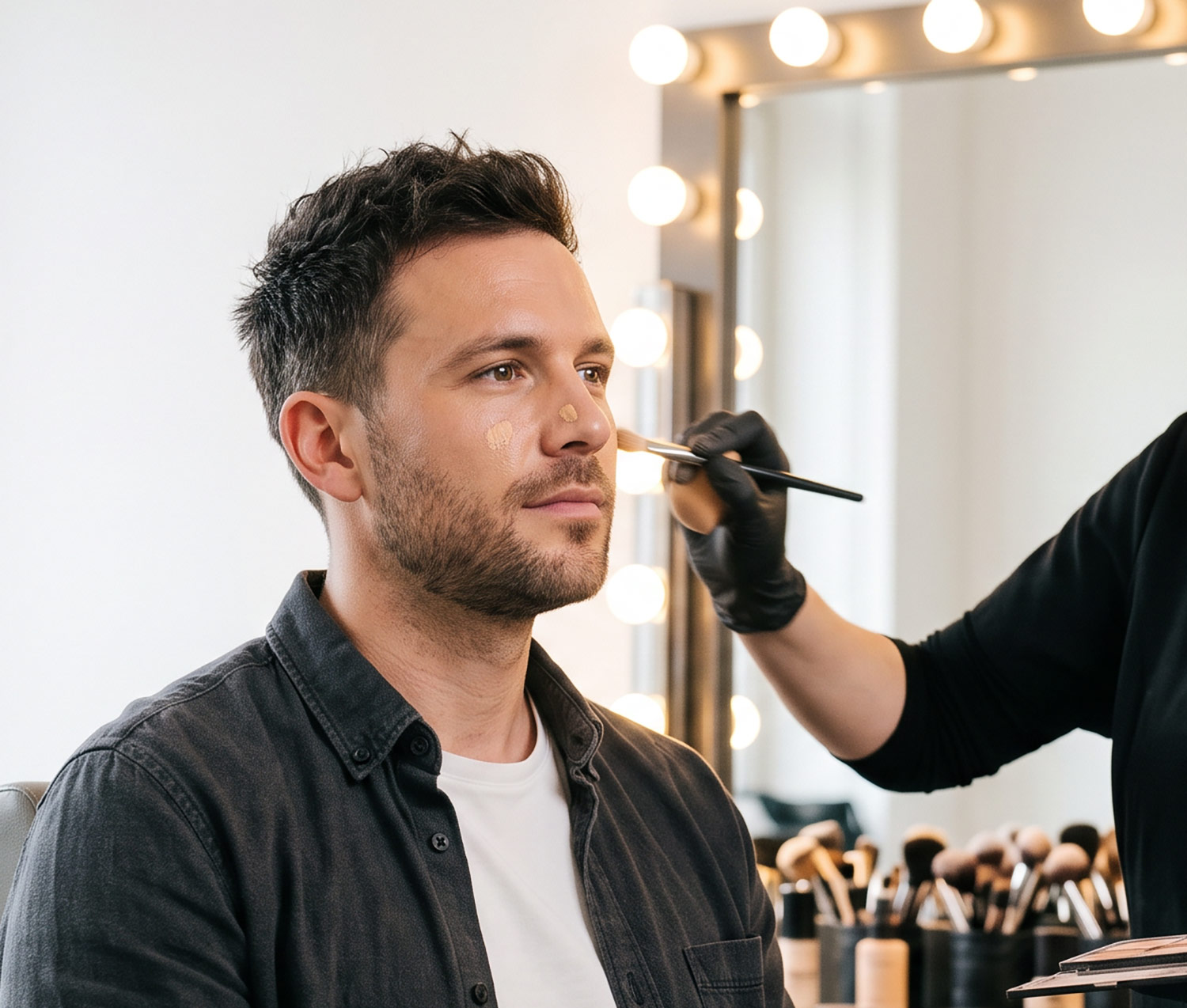
Why Every Male Actor Wears Makeup (Even When You Can’t Tell)
If you’ve ever watched a film or television series and wondered how male actors somehow manage to look consistently polished without appearing to wear makeup, you’re not alone! Many people mistakenly assume that only actresses spend time in the makeup chair, while their male counterparts simply walk onto set; however, this couldn’t be further from the truth. In this post, I will share the reality of what goes on behind the scenes, with pretty much every actor wearing makeup ready for the cameras to start rolling.
Professional makeup is pretty much the standard for quality film, television and theatre production for actors of all genders. It is particularly necessary with advanced 4K (and beyond!) camera technology and high-powered lighting that is used on set. In this article, we discover insider knowledge of the industry, provided by Isabelle Kerrington (a performance arts enthusiast with a passion for theatre makeup). So without further ado, let’s find out more!
The Myth That Male Actors Don’t Wear Makeup
Yes, male actors also wear makeup! In fact, it is standard practice across film, television and many live productions. The biggest misconception is that makeup is only used to create dramatic or glamorous looks. On a professional set, its main purpose is to help all actors, including male actors, look natural and consistent on camera.
Many viewers associate makeup with bold cosmetics. The truth is that screen makeup is designed to go unnoticed. This is why there are makeup departments which are a standard part of virtually every professional production.
Nowadays it pretty much doesn’t matter whether an actor is filming a blockbuster, a television drama or a commercial. There are pro makeup artists who make subtle adjustments that help maintain continuity throughout filming. They do such a great job that you wouldn’t notice it, which is exactly the point.
Professional Cameras See Everything
Modern film and television cameras are crafted to capture far more detail than your eye will notice in everyday life. Add this to the powerful lighting, and you are bound to see minor skin imperfections that would otherwise go unnoticed.
Film sets use these powerful studio lights to get the desired look for each scene. Outdoor productions, on the other hand, might use bright natural sunlight or additional lighting equipment.
The problem is that such strong lighting may:
- Create excessive shine on the forehead, nose and cheeks.
- Make skin appear paler or uneven.
- Increase the visibility of redness or beard shadow.
- Cause inconsistencies between shots filmed under different lighting conditions.
That’s one of the main reasons makeup is such a vital part of professional productions. Virtually all productions have professional makeup tasked with preparing all male actors’ skin to minimise the appearance of things like visible pores, uneven skin tone, facial redness, dry or flaky patches, beard shadow after shaving, dark circles or signs of fatigue and the like.
It’s Not Just Foundation!
When you hear that male actors wear makeup, foundation is often the first product that comes to mind. Well, professional makeup artists use a range of products. The products picked depend on aspects like the actor’s skin, the lighting, the camera and the requirements of the scene.
Here’s a look at some of the most common products used on professional film and television sets:
Primer
Primer is applied before other makeup products to create a smoother surface for application. It can help reduce the appearance of texture. It can also improve how makeup wears throughout the day-it keeps makeup products in place during long filming sessions.
Concealer
Concealer is used to cover small areas rather than the entire face. Makeup artists commonly apply it to male actors to minimise temporary blemishes, dark circles, redness or minor cuts that could become more noticeable on camera.
Matte Powder
Matte powder is one of the most frequently used products on set. Its primary purpose is to reduce unwanted shine caused by studio lights or warm filming conditions. Makeup artists often reapply powder between takes to keep the actor’s skin looking consistent.
Bronzer Or Contour (When Needed)
Bronzer or contour isn’t part of every actor’s makeup routine, but it may be used when a scene requires additional definition or when strong lighting makes facial features appear flatter on camera. The application is typically subtle and designed to look natural.
Brow Grooming
Well-groomed eyebrows help frame the face on camera. Depending on the actor and the role, makeup artists may brush, tidy or lightly fill sparse areas to create a neat, consistent appearance without making the brows look overly styled.
Lip Balm Or Lip Colour Correction
Dry or pale lips can stand out under high-definition cameras and bright lighting. In such a case, clear lip balm is used to prevent cracking. A subtle colour-correcting product may be used if lips appear unusually pale or uneven on screen.
Different Roles Need Different Makeup
It is worth noting that not every production calls for the same approach to makeup. While the goal is often to make actors look natural, the products and techniques used depend on factors like the story being told, the filming environment and the character being portrayed. The makeup artist will strive to support the role rather than apply the same look to every actor.
Everyday Natural Looks
Most films, television dramas and commercials will go for makeup that audiences never notice. In this scenario, makeup artists focus on evening out skin tone, reducing shine and maintaining continuity while preserving the actor’s natural features. The result is a polished appearance that still looks believable on camera.
Historical Films
Period dramas do require actors to reflect the fashions and lifestyles of a particular era. So, makeup artists will research historical references to create looks that fit the time period. This might mean subtle complexion changes, facial hair adjustments or age-appropriate styling.
The objective is to help the audience believe the character belongs in that setting.
Superhero Movies
Superhero films often involve long filming days, physically demanding scenes and elaborate costumes. Makeup in this case is used to maintain a consistent appearance despite sweat, movement and changing lighting conditions.
Depending on the character, artists may also work alongside special effects teams to blend makeup with prosthetics, masks or other costume elements.
Fantasy And Science Fiction
Fantasy and science fiction productions tap into more creative makeup to bring fictional characters to life. Depending on the role, this may involve altered skin tones, distinctive facial features or prosthetic appliances that transform an actor into a creature or otherworldly character. Even then, the makeup is carefully applied to support the story while allowing the actor’s performance to remain visible.
Stage Performances
Theatre makeup serves a different purpose from film and television makeup. Keep in mind that the audience views performers from a distance. So, stage lighting can wash out facial features, although makeup is usually more noticeable. Stronger definition thus ensures expressions remain visible throughout the performance, even for those seated at the back of the venue.
Special Effects Makeup
While most screen makeup is designed to look natural, special effects (SFX) makeup has a completely different purpose. Instead of subtly enhancing an actor’s appearance, this type is used to create physical transformations that help tell the story. This involves specialised materials, SFX prosthetics and sculpting techniques that go far beyond everyday cosmetic products.
Depending on the production, special effects makeup may be used to create:
- Realistic scars and old wounds
- Bruises, cuts and other injuries
- Ageing effects, such as wrinkles and age spots
- Burns and other skin damage
- Monsters, aliens or mythical creatures
- Prosthetic features, including altered noses, ears or facial structures
Unlike beauty or corrective makeup, which is supposed to go unnoticed, SFX makeup is typically meant to be seen. Audiences are expected to recognise that a character has been injured, aged or transformed into something entirely different. The challenge for makeup artists is making these effects look convincing enough that viewers accept them as part of the story.
Creating realistic special effects in such setups requires close collaboration between makeup artists, prosthetic designers, costume departments and visual effects teams.
For example, an actor playing an older version of a character may wear carefully crafted prosthetic pieces to create wrinkles and sagging skin. A fantasy creature might require full facial prosthetics, custom paintwork and contact lenses to achieve the desired appearance.
Wrapping Up
In a nutshell, the idea that male actors don’t wear makeup is one of the most common misconceptions. In reality, makeup is a standard part of professional film, television and theatre productions. It comes in handy in helping all actors to look consistent under high-definition cameras, powerful lighting and demanding filming schedules. It’s more or less a tool used to even out skin tone, reduce shine, minimise temporary blemishes and maintain continuity between scenes.
Thanks for reading this special article discussing showbiz makeup for men – please share your thoughts in the comments section below.
