

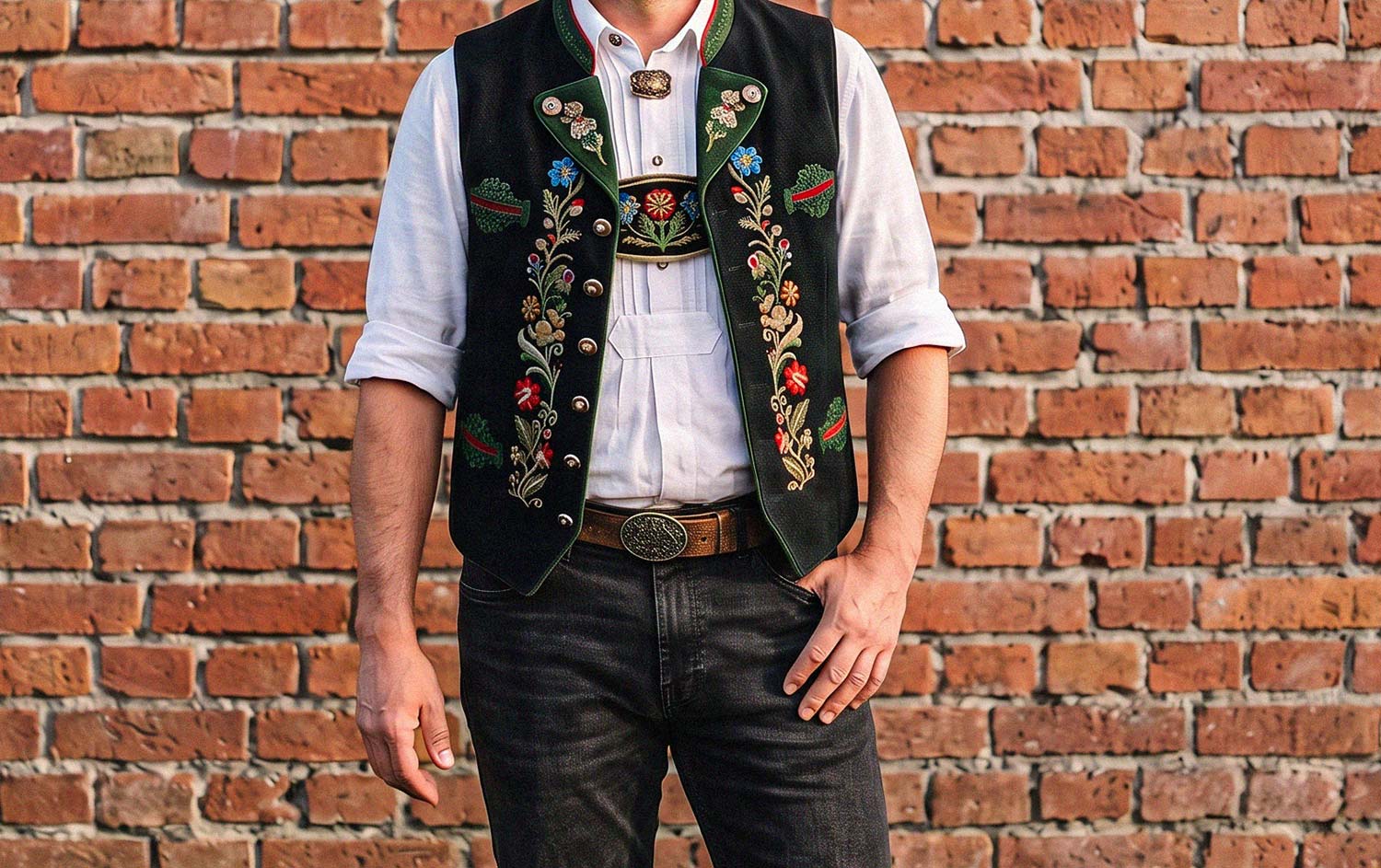
How To Wear Traditional European Heritage Dress In A Modern British Wardrobe
Blending classic European heritage dress styles in a modern British wardrobe (if done correctly) can offer a refined, eye-catching appearance. In my latest fashion article, I will discuss further and offer a number of useful tips.
Start this journey by combining both European heritage fashions with classic British clothing choices and avoid treating them as a costume. This key point is what separates a well-dressed nod to heritage from a head-to-toe folk costume. For example, a pair of lederhosen blended with Savile Row tailoring will create a bold, polished aesthetic. In contrast, the dirndl’s fitted bodice and full skirt for the ladies create a silhouette that defined Victorian-era dress (and still gets worn today). Both of these wardrobe options pair formal and structured components with something far more relaxed.
What Is A Modern British Wardrobe?
A modern British wardrobe means quality basics built around one heritage detail at a time. Typically symbolic pieces such as trench coats, wool peacoats, and tailored trousers form the base of the British wardrobe. Muted neutrals like navy, camel, and charcoal dominate the colour palette. One accent colour will then successfully repeat throughout the outfit instead of competing with several different shades.
Two Most Prominent Elements Of The British Wardrobe
Savile Row tailoring anchors the formal end of the British closet, with precision. In contrast, trainers, hoodies, and relaxed denim worn without ceremony lie in the other direction, toward streetwear centred more on a relaxed fit.
However, the modern British style pairs structured tailoring with streetwear within the same outfit. A tailored blazer worn over a plain T-shirt and trainers reads as effortless, while the same blazer worn with a shirt and tie underneath is unmistakably formal.
What Is A Traditional European Heritage Dress?
Traditional European heritage dress means regional folk clothing that is still worn today for festivals, weddings, and even just for everyday cultural pride.
Elements Of Traditional European Dress
In German-speaking Europe, traditional clothing is called Tracht. For women, the dirndl; for men, lederhosen.
Dirndl And Lederhosen Define European Tracht
A dirndl features a fitted bodice with a flowing skirt and apron, worn over a blouse. The apron is tight at the waist, and the snug bodice is very similar to that of British Victorian gowns. For men, lederhosen lead the wardrobe. Kniebundhosen sit at the knee, Bundhosen run full length, and both come in deer, goat, or cow leather (depending on preference for overall weight and finish). Haferlschuhe finishes the traditional look, alongside a Trachten shirt and (sometimes) a Charivari chain worn across the vest.
Tracht Clothing – Meaningful Embroidery And Accessories
Tracht embroidery carries its own symbolic meaning, and that’s what authentic dirndl brands like DirndlOnlineShop.com, Dirndl.com, Lederhosens, and others reinforce in their collections. Edelweiss signals Alpine resilience, oak leaves stand for strength, and none of this reads as costume dressing once you know the history behind it.
They are centuries-old craft markers, much like a Harris Tweed label marks British skill rather than just decorating a jacket.
How Modern British Wardrobe And Traditional German Outfits Correlate
Both modern British and traditional European wardrobes follow the same principle: the entire outfit revolves around a single heritage piece. A tweed jacket or a tartan scarf serves as the single loud element in modern British wear.
German Tracht works in pretty much the same way once it moves outside of Oktoberfest. A single pair of lederhosen or a Trachten blouse can anchor an otherwise simple outfit in contemporary fashion.
Similarities In European And British Wardrobes
Natural materials are almost always given a higher preference over synthetics in both wardrobes. Wool and cotton carry the British wardrobe, whereas deer, goat, and cow leather carry the German counterpart. Both treat quality as generational rather than seasonal, in turn, building the outfit so it lasts for decades and eventually gets handed down to the next generation.
Even though the two distinct wardrobes originated in different countries, they share the same instinct. Buy fewer, yet better pieces, and let the craftsmanship speak instead of logos or the constantly changing cycle of trends.
How To Wear Traditional European Heritage Dress In A Modern British Wardrobe
Blending European outfits with a modern British wardrobe means treating the selected heritage piece as an accent (not the whole look). Modern British style already runs in contrast, with tailoring set against streetwear pieces. German Tracht carries a similar contrast, with a structured Victorian-rooted shape set against everyday comfort and simplicity. Blending the two simply lets one wardrobe’s structure meet the other’s ease.
In the five techniques listed below, you will discover an idea that offers a repeatable method covering structure, texture, colour, footwear, and accessories.
Pair A Structured Piece With A Relaxed Piece
Place one structured heritage piece of European fashion against one relaxed modern British piece, and never pair two structured pieces together. Lederhosen already carry their own unique structure, built from stiff, shaped leather. Pair them with a plain hoodie or a relaxed knit instead of a matching jacket. A dirndl’s fitted Mieder bodice works much in the same way, worn with jeans instead of the skirt.
Pair A Textured Piece With A Plain Piece
Allow one textured piece to do the visual work, and keep everything else around it flat and plain. For example, an embroidered Tracten vest or jacket already carries more than enough texture on its own. Pairing it with a plain cotton shirt stops over-layering of textured clothing, keeping the overall focus entirely on the main heritage piece. Leather lederhosen work much in the same way, so the shoes and base layer underneath should remain basic and simple.
Blend The Two Palettes Into One Colour Story
Select a neutral shade that both British and European wardrobes already share, and then make this the theme of the whole outfit. The modern British wardrobe leans heavily towards neutrals such as charcoal, cream, and navy. On the other hand, the German tracht colour scheme will largely depend on natural colours like forest green, brown, and blue.
Pairing brown lederhosen with a camel sweater, or a maroon dirndl blouse with a navy blazer, anchors the two styles based on colour palette selection.
Swap The Footwear For A British Staple
Trading Haferlschuhe for Chelsea boots or trainers transforms the outfit into a modern aesthetic instead of just a costume. Haferlschuhe works perfectly at a festival with the tracht, but signals a costume once the outfit goes casual.
Chelsea boots keep the same sturdy style that the British wardrobe already heavily favours. Trainers push the same lederhosen or dirndl piece further into everyday, streetwear territory.
Limit Accessories To One Heritage Signal
One heritage accessory is plenty for one outfit – let it stand for everything else. A Charivari chain or an embroidered belt already carries more than enough weight on its own. Add a second folk accessory alongside it, and the whole outfit transitions into costume (and fast!). When worn against a plain sweater, that single accessory mimics the same job as a pocket square in a Savile Row-adjacent outfit.
Summary
British heritage dressing and German Tracht follow the same rule – one strong piece carries the outfit, and everything else stays quiet and modern. Dirndls and lederhosen fit naturally into British basics like a trench coat, a tailored blazer, or a pair of Chelsea boots. A single well-made Tracht piece (when worn with restraint) belongs in the same wardrobe as a classic, timeless tweed blazer.
Are you a fan of mixing English and German fashions together? Let me know in the comments section below.
