

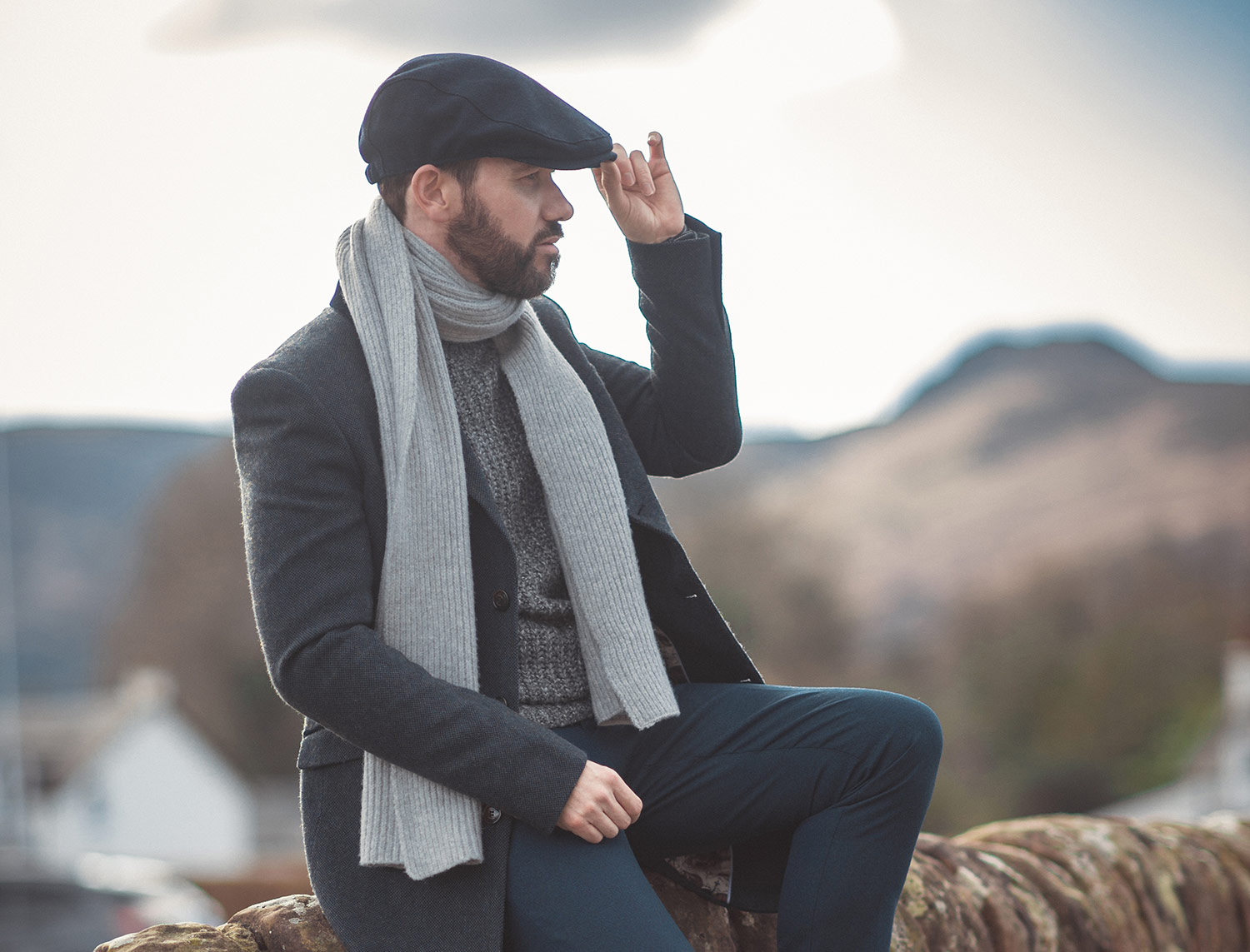
Why Harris Tweed Might Be The Most Waterproof Natural Cloth In The World?
If you are on the lookout for something waterproof to protect you from the unpredictable UK weather, the typical choice would be a modern technical jacket (especially over a Harris Tweed coat – which at first glance doesn’t look like it will repel rain!).
Tweed looks heavy (even absorbent) and likely to become unpleasantly damp after 20 minutes in bad weather. However, it is a popular fabric for outdoor wear (not because it keeps them perfectly dry) but because the blend of woven wool cloth, made without coatings, membranes, or synthetic treatments, has earned an honest reputation over decades, has a timeless appearance, and still handles bad weather admirably well. Let’s find out more in my latest review.
Part Of The Explanation Lies in Where It Comes From
The Outer Hebrides is not the typical location that inspires a romantic idea of the weather. Many visitors occasionally describe the landscape as dramatic! Rain arrives frequently, and the wind is almost semi-permanent (and in many cases, the distinction between the two becomes difficult to spot).
Nevertheless, it is worth remembering that the Harris Tweed cloth was developed there out of necessity. Generations of Islanders wore tweed because they needed something practical, and this fabric proved its effectiveness, while non-starters failed and disappeared.
The Benefits Of Wool
Most tweeds are crafted entirely from premium wool, which does most of the work. Modern textile manufacturing very often removes the natural oils found in fleece, which complicates production. On the other hand, cleaner fibres are easier to process, dye, and standardise. This is the important distinction: Harris Tweed does not repel water because something has been added to it; it works because nothing has been removed during its construction, and it has been left “pure”.
The wool retains more lanolin than many commercially processed fabrics (an extraordinary substance found in sheep that serves as a barrier that helps them survive harsh weather conditions). Once you realise that sheep have stood calmly out in the open during rainstorms, it is an eye-opener, and makes you wonder why synthetic materials are the main basis for weather protection in the modern world.
Why Weight Matters?
Next, we have the overall weight – heavy cloth has fallen out of favour as lightweight clothing is much easier to market and pretty much everyone prefers to carry less. Modern fabrics often chase “lightness” above all else, but Harris Tweed comes from a period of time when durability mattered more than carrying an extra few hundred grams.
When rain lands on those types of densely packed fibres, the wool responds – the yarn swells ever so slightly, the weave tightens, and moisture finds fewer routes through the clothing. In the modern technical sense, it is not waterproof; it is something more unique and adapts to its surroundings.
The Value Of Leaving Things Alone
Harris Tweed simply does its job without issue, and it is a key reason it has survived so long against competing fabrics. It was never designed around a seasonal trend or a product cycle. It evolved through use and countless days outdoors in the Atlantic weather by people who had very little patience for clothing that didn’t work. Modern-day Harris Tweed coats and jackets continue that tradition – typically made from premium cloth in the Outer Hebrides and cut for practical wear (and look stylish to boot!).
In an age of increasingly complicated materials, there is something truly refreshing about a design whose greatest strength lies in remaining largely unchanged, and that is definitely a huge plus in the ever-growing fast-fashion world.
Are you a fan of tweed? Do you own any pieces in your regular wardrobe rotation? Please share in the comments section below.
